
Visiting Los Osos Oaks State Natural Reserve
Tucked alongside Los Osos Valley Road, a mere nine miles west of San Luis Obispo, a 90-acre stretch of protected land quietly thrives. Los Osos Oaks State Natural Reserve is home to several distinct plant communities, including one of the area’s most fascinating species of trees: the dwarf coast live oak.
Dwarf Oaks
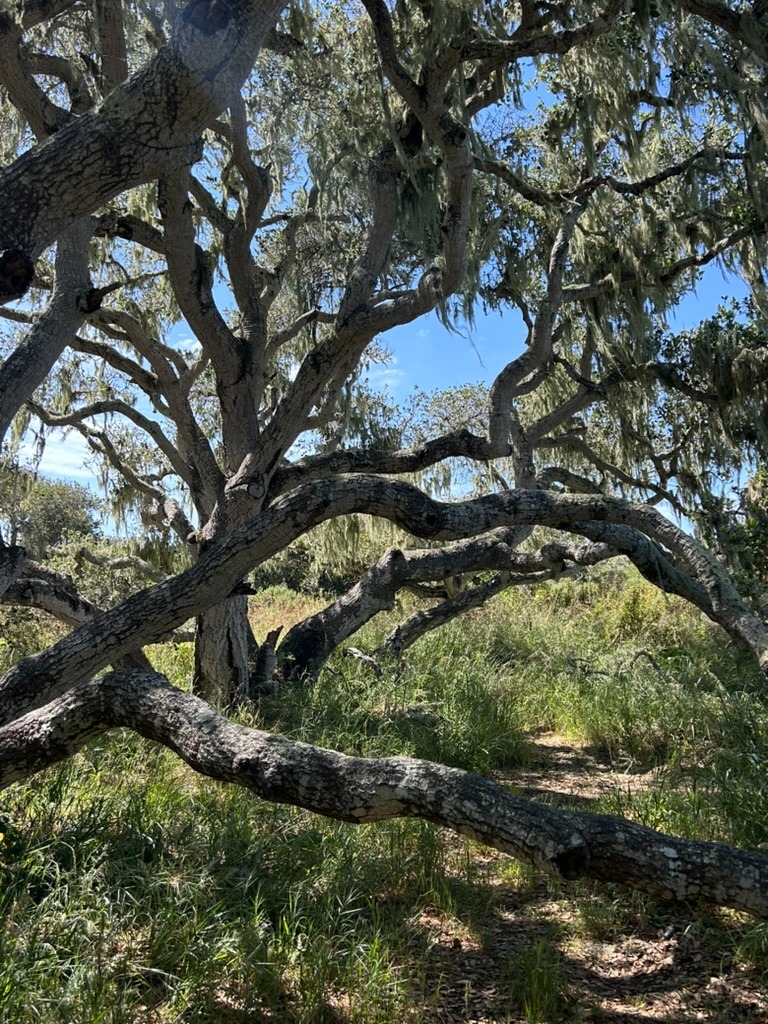
While coast live oaks often grow up to 25 feet in other environments, a portion of the oaks in this sand dune ecosystem have stunted growth, reaching only 6-8 feet tall. These trees are known as dwarf oaks for their notably smaller size, an adaptation to sandy soil and dry conditions.
Oaks are considered a keystone species, meaning they play a crucial role in supporting the balance of their ecosystem. Species such as fungi make their home among oak roots, while birds and small critters feed on and disperse acorns– a mutualistic relationship that fosters future oak growth.
Beyond ecology, oaks have long held symbolic meaning across cultures, often representing sacred strength and stability in folklore and literature. Oaks are also known for holistic and medicinal uses, and Indigenous nations historically utilized acorns as an important dietary resource.
Visitor Observations
A coastal breeze gently moves through the land. Though the faint hum of Los Osos Valley Road lingers near the entrance, it quickly fades deeper into the reserve. Time seems to slow down here, as the land’s flora and fauna flourish undisturbed.
Sitting beneath an oak tree, with strands of lace lichen dangling from a canopy of branches overhead, feels grounding– a familiarity like returning home. Birds chirp from above as the calming effects of immersion in nature begin to settle in.
Los Osos Oaks State Natural Reserve offers an idyllic escape from the constant buzz of everyday life. The land is abundant with shady nooks perfect for reading, sketching or simply observing the trees. Three trails weave together like an organism of their own, leading visitors through stretches of oak communities and sudden pockets of complete sunlight. Along one side of the reserve, a creek contributes its own soundtrack of trickling water moving downstream.
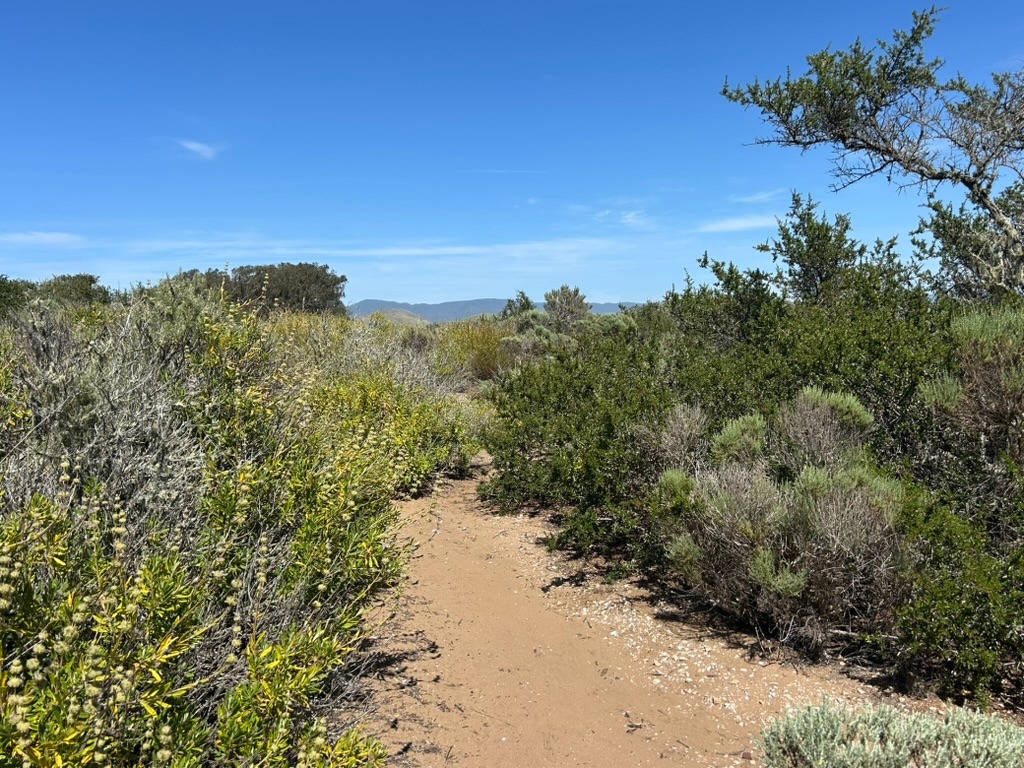
Yet, the true stars of the reserve are not the serene ambiance or salty air, but the ancient groves of dwarfed oak trees that cover the coastal sand dune habitat.
Conservation Efforts
Los Osos Oaks State Natural Reserve protects critical ecosystems and biodiversity while providing a space of quiet serenity on the Central Coast. It is a special place where an oak woodland habitat contributes to thrive despite surrounding development and land for farming.
Before Visiting
Cover Up and Stay on Trails
Poison Oak is a common undergrowth species throughout this reserve. To identify and avoid it, look for clusters of three leaves with rounded lobes. Wearing long pants and sleeves can help prevent skin contact with the plant’s resin. Staying on designated trails also helps protect sensitive habitats.
Try a Mindfulness Exercise
Walking slowly and noticing nearby sounds– birds singing in the trees, feet crunching on dried oak leaves, or observing how the light casts shadows on the path below– can help the body relax and feel grounded in the present moment. Practicing intentional mindfulness in nature by engaging the senses can reduce stress and help regulate the nervous system.
Remember to Leave No Trace
The Leave No Trace Seven Principles aim to minimize visitor’s impact on ecosystems. These principles include disposing of waste properly, leaving natural areas undistributed, and respecting wildlife by maintaining a safe distance.
Prepare Ahead
There are no restrooms or campgrounds at the reserve, and dogs are not permitted. Los Osos Oaks State Natural Reserve is open for day-use hiking and recreation.
Los Osos State Natural Reserve offers visitors a peaceful space for quiet contemplation while displaying the biodiversity of the Central Coast. The land is an invitation to breathe deeply and slow down beneath the oaks.
