
Driving down Highway 1, traversing the coastal landscapes parallel to the golden sun, misty curiosities pop up in the mind of what lies beneath the striking blue ocean. What creatures inhabit the underworld and what secrets make up its story?
Aquatic ecosystems reveal themselves –– or rather the ocean reveals them, as it breathes in and exhales, ebbs and flows from high and low tide.
From Hazard Reef or Corallina Cove in Montaña De Oro, to Shell Beach, Morro Strand Beach, Cayucos Beach, and north into San Simeon and Piedras Blancas, it takes a slower pace and keen eye to notice the intricacies of these low, rocky intertidal zones, where creatures’ lives are unfolding at a scale we often forget to notice.
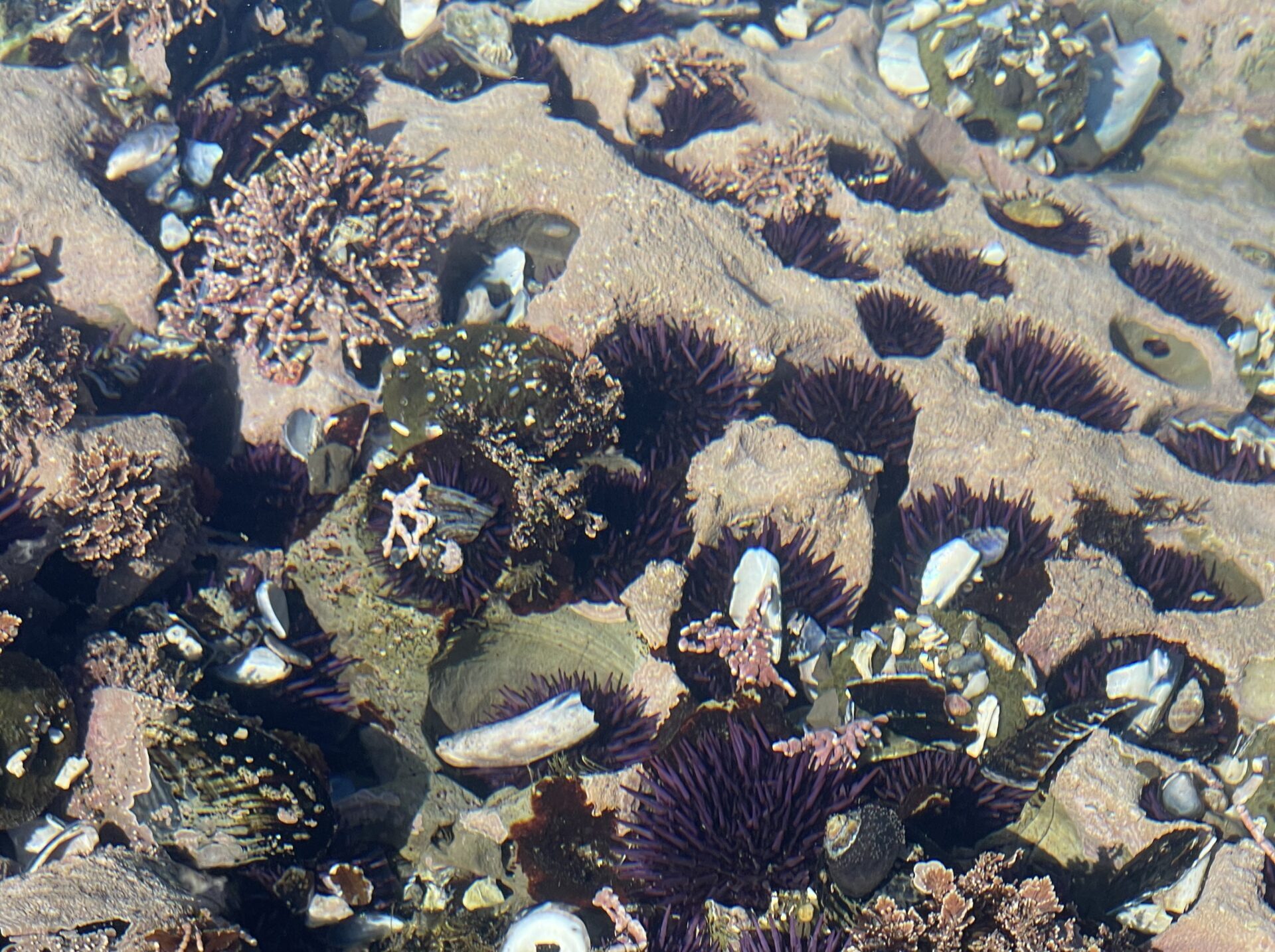
At low tide, you may find sprawling tidepools teeming with life: ochre sea stars the color of fire, the spindly spines of purple urchins, scurrying shore crabs and hermits with borrowed homes on their backs, and anemones with tentacles that sway like underwater flowers. Woven together into the mosaic of the ecological web, it’s fascinating how many organisms coexist in these underwater spaces.
If you’re lucky, you may spot shell-less sea slugs known as nudibranchs, that display striking vibrancy and warn predators they can sting and defend themselves. You can refer to this list of the 1,367 nudibranch observations in San Luis Obispo County that provide map pins on iNaturalist.
Chitons and limpets, two rock-hugging mollusks, can also be discovered in the intertidal zone, clinging tightly to rocks and bearing an interesting history.
Chitons are ancient marine mollusks with eight-part shells that have been around for more than 500 million years. They clamp down on rocks at low tide, but move about to seek food. With their remarkable sense of direction, they return day after day to their exact spot, by creating a “home scar” on the rock.
In a similar fashion, limpets create “home scars” and also return to exact spots after journeying for food. While chitons have eight overlapping shell plates, limpets have a single cone-like body. They too graze on algae with their tongues, also known as radulas.
Oftentimes, as you are peering down into a pool glistening with sunlight, you are not only watching but being watched. The wise eyes of an octopus may be scanning you for danger or as curious as you are.
These shy but extremely intelligent creatures can be spotted during very low tides, camouflaged on rocks or moving across wet sand hunting for crabs, clams, sea snails, and small fish. A common species along our Central Coast is the Pacific red octopus.
For the best tidepooling experience, you can check the tides measured by noaa.gov at Port San Luis before making a trip to your next spot. Wear comfortable clothing, and expect to be drawn to the rocky floor, perhaps spending most of the time bent over with limbs contorted to peer into the alluring sea world.
The tidepools of the Central Coast never scream for attention, but instead quietly invite you in. Exposed during low tide, and hidden during high tide, these spaces provide solace for those seeking time in more organic and awe-inspiring places, especially in the backdrop of busy routines and 24-hour media cycles.
Indulge in the pleasures of looking inward and zooming closer. Learning of the creatures staring back at you from the rocky pools might just teach you a little something about yourself too.
