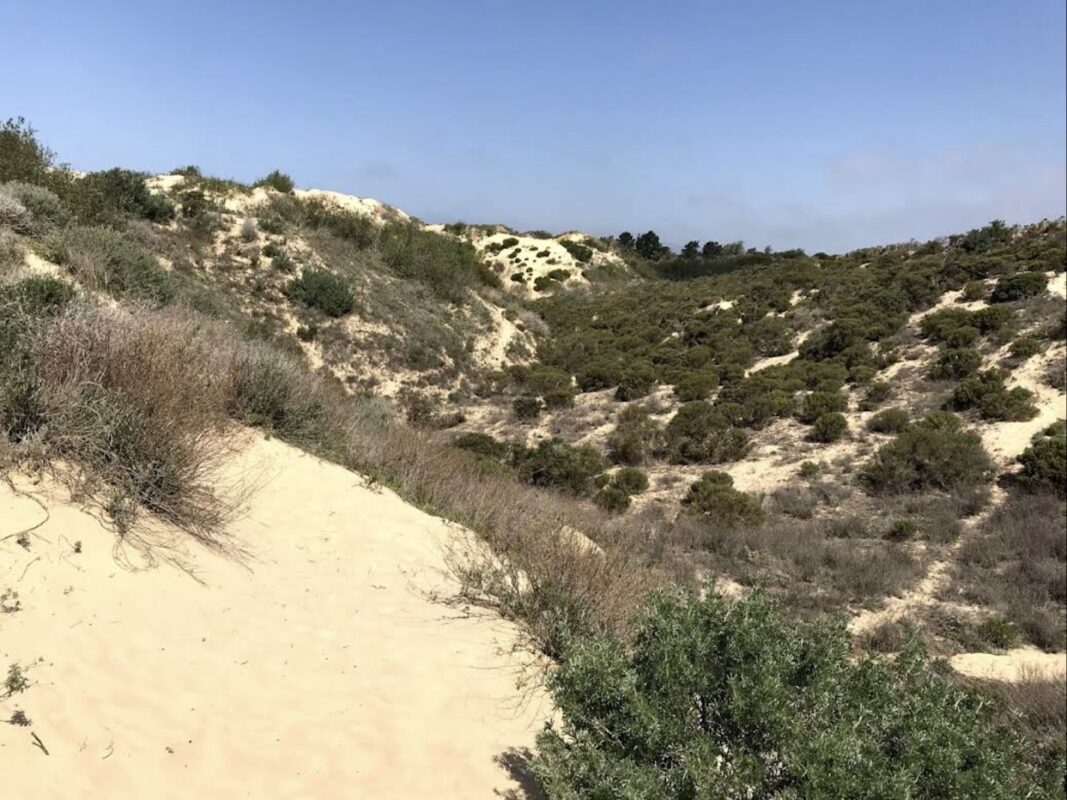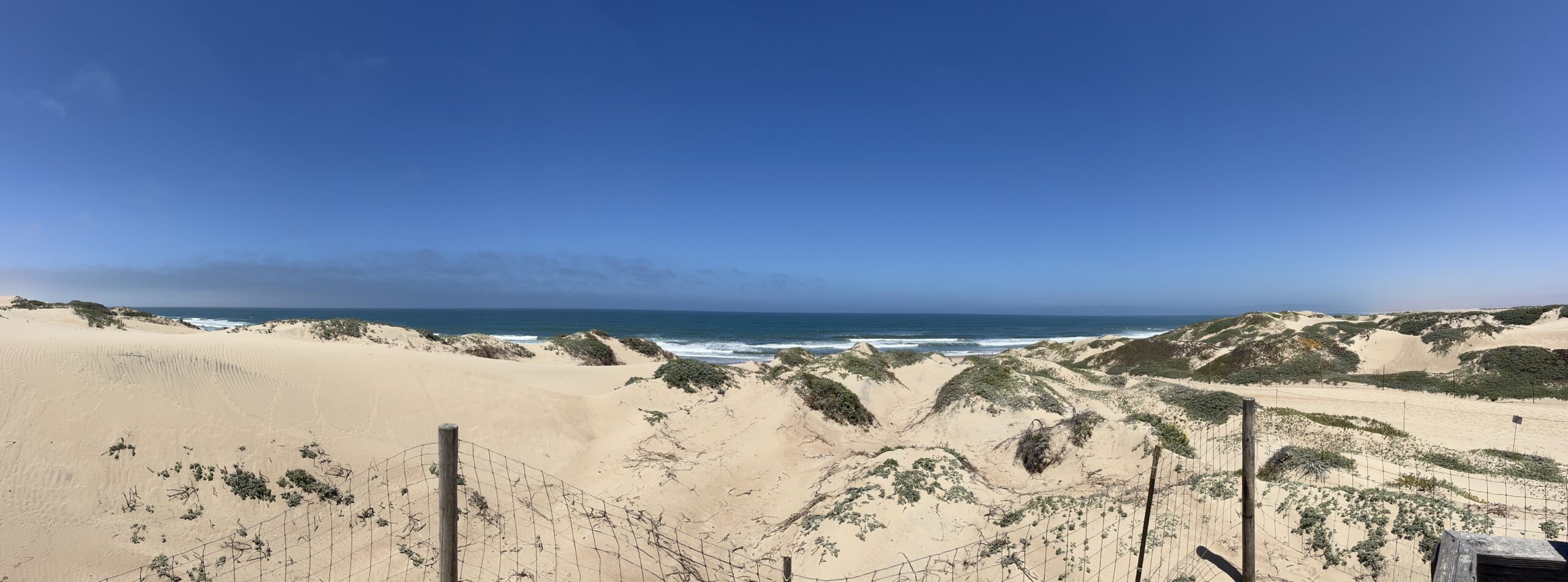
Stand out on the open sand at Oceano Dunes on any breezy afternoon, and you can watch the entire landscape physically creep forward. The wind coming off the Pacific is relentless, constantly shifting the floor beneath your feet. It looks completely barren, but this coastline actually relies on a constant, chaotic balancing act between blowing sand and a few incredibly tough native plants.
Without species like Dune mint, Yarrow, and Silver dune lupine, the dunes would simply flatten out or blow inland unchecked. These low-lying native seedlings act as tiny speed bumps for the wind. When blowing sand hits their leaves, the air slows down, dropping the sand into piles around the base of the plant. Instead of getting suffocated, the plants quickly push new stems up through the accumulation to catch even more sand.
This continuous cycle creates small, stable mounds anchored by a massive network of living roots. Eventually, these mounds merge to form the foredunes—the coast’s primary defensive barrier against heavy winds and erosion. When this native vegetation thrives, it creates vital nesting cover for sensitive shorebirds like the Western snowy plover and California least tern, while the stabilized soil underneath supports burrowing owls and local insects.
Decades of heavy foot traffic and the introduction of invasive ice plants threw this whole system out of whack.The Ice plant was originally brought in to permanently freeze the dunes in place, but locking the sand down ended up choking out native habitats. The ecosystem actually needs a certain amount of natural movement to stay healthy, according to Cal Poly Magazine.
Restoring that balance is the driving force behind a major restoration project by California State Parks, the Coastal San Luis Resource Conservation District and student volunteers from Cal Poly.
Instead of fighting the wind, these shoreline stewards are working with it. To rebuild degraded foredunes from scratch, crews spread local rice straw across flat, empty sand. The straw acts as a temporary grid to trap blowing sand, giving hand-collected native seeds a stable pocket of ground to take root without getting swept into the ocean.
The project isn’t trying to lock the dunes in place forever. By getting native plants back into the sand, the restoration teams are giving the coastline the tools to rebuild its own defenses, ensuring the dunes can keep moving naturally.