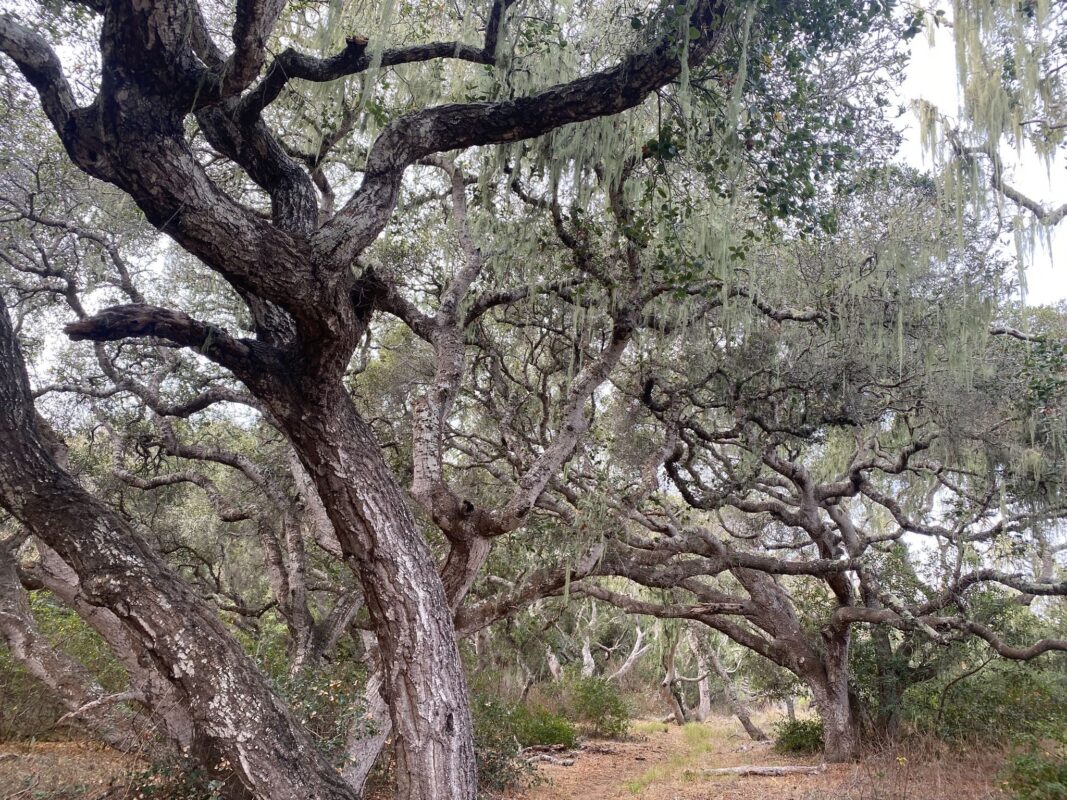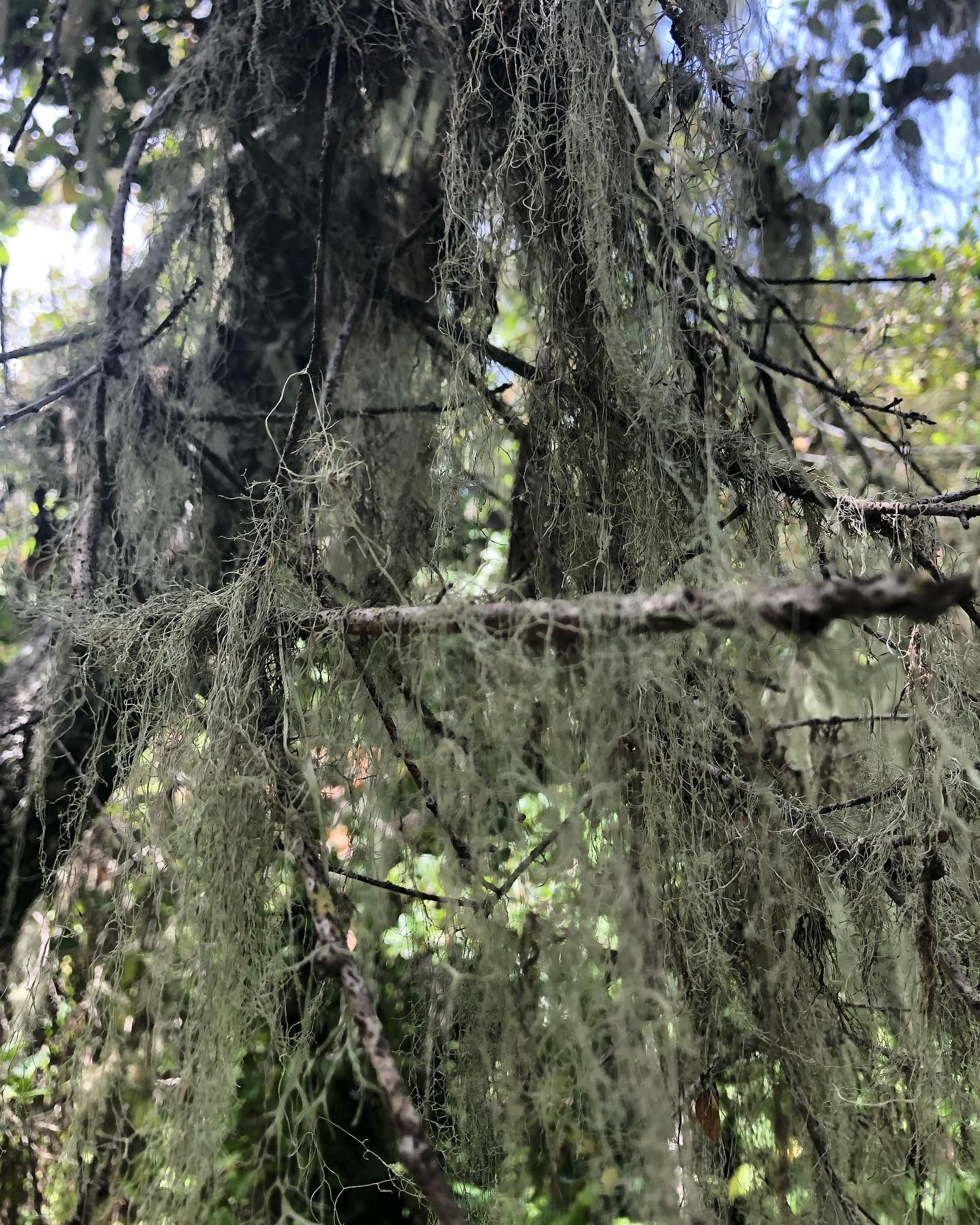
If you’ve ever pulled off the road at Los Osos Oaks, you know the place feels a little surreal. Instead of towering over the trail, the Coast live oaks here are completely different from what you’d expect; their gnarled branches twist sideways and practically crawl along the dirt. Some of these ancient trees barely come up to your chest, which is wild when you realize the exact same species can grow massive in other areas of the reserve. Walking through the grove feels like stepping into a miniature world where the typical rules of nature have been rewritten.
A lot of it has to do with the ground beneath them. A long time ago, this spot was covered in moving coastal sand dunes. The dunes eventually settled down, but the sand stayed behind, forming what geologists call a relict dune system. Because sandy soil drains water quickly, it makes it incredibly difficult for plants to hold onto moisture between California’s seasonal rains. According to California State Parks, the smaller oaks have been stunted by conditions associated with their location (Los Osos Oaks State Natural Reserve), including the porous sandy soil and a lack of necessary minerals and moisture. The larger oaks, by contrast, grow in areas where the soil manages to hold onto more water, creating a stark visual contrast within just a short distance.
But the Pygmy trees are only part of the draw. The reserve actually has five different plant communities, including Coastal sage scrub, Central Coastal scrub, Dune oak scrub, Coast live oak forest, and riparian vegetation along the creek corridors. This tight patchwork of habitats functions as a vital ecological refuge on the Central Coast. The trails pass through these changing microclimates, showing visitors how drastically the plant life shifts based on slight variations in the soil and water availability.
That variety also creates habitat for plenty of wildlife. The oaks themselves produce acorns that provide food for animals, while their branches and foliage offer shelter for birds and other wildlife. Scrub jays bounce between the low canopy, while woodrats build their complex stick houses in the tangled undergrowth.
It’s easy to spend the whole visit staring at the crazy shapes above ground, but there’s a lot happening beneath your boots too. Next time you’re out on the trail, look down at the sand path. You’re walking across ancient coastal dunes, and their history is part of what makes this strange little forest possible.