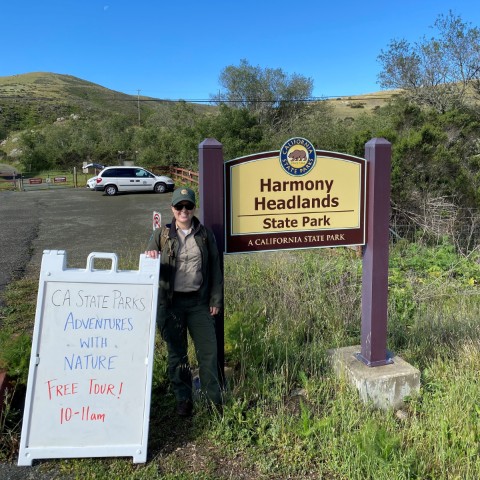
Most travelers driving Highway 1 zip right past it. Between Cayucos and the tiny town of Harmony, the entrance to Harmony Headlands State Park is easy to miss: a small parking area and modest sign marking the beginning of a largely undeveloped coastal park.
The 784-acre property has an unusual conservation history. After years of plans for residential development, the American Land Conservancy acquired the property in 2003 and transferred it to California State Parks for permanent protection. The Cayucos Land Conservancy later helped with efforts to establish the park for public use, while the Central Coast State Parks Association supports educational and interpretive programs. Today, Harmony Headlands preserves a substantial stretch of coastal landscape with remarkably little infrastructure. The journey into the park begins along a trail that follows an old ranch road west from the parking area. The route crosses rolling marine-terrace grasslands and passes through areas shaped by the property’s history as a working ranch. Seasonal wetlands, ponds, and a creek provide habitat for wildlife including the federally threatened California red-legged frog and the southwestern pond turtle.
The character of the landscape changes with the seasons. During the wetter months, the grasslands can become green and are dotted with wildflowers. As summer progresses, the vegetation turns golden, and the persistent coastal wind becomes an unmistakable part of the experience.
Farther along, the landscape opens toward the Pacific. The trail reaches the coastal marine terrace, where visitors can look across rugged shoreline and expansive ocean views. There is no conventional sandy-beach access from the park; instead, the coastline below consists largely of rocky shoreline, cliffs, and tide-washed areas. On clear days, the views extend along the Central Coast, with landmarks such as Morro Rock and the shoreline toward Montaña de Oro visible from portions of the park.
The coastal edge is also valuable habitat for birds and other wildlife. Brown pelicans can be seen flying along the shoreline, while double-crested cormorants and black oystercatchers use the rocky coastal habitat. Inland, Northern Harriers and other raptors patrol the grasslands, taking advantage of the open terrain and coastal winds. Marine mammals, including migrating gray whales, may also be visible offshore during the appropriate
seasons.
What makes Harmony Headlands special isn’t an extensive network of trails or elaborate visitor facilities. It’s the opportunity to experience a relatively undeveloped piece of the Central Coast. The property protects coastal grasslands, wetlands, wildlife habitat, and marine-terrace landscapes in an area that has long faced pressure from development.
Harmony Headlands is a reminder that a state park doesn’t need extensive infrastructure to be valuable. Sometimes its greatest asset is simply the land itself: open grasslands, seasonal wetlands, rugged coastal terraces, ocean wind, and uninterrupted views of the Pacific protected so that they can remain part of the Central Coast landscape for generations to come.