
The importance of daily moments in nature and five ways to feel more connected.
In an age constantly circulating with new technology, trends and information, finding ways to connect with nature is becoming increasingly crucial.
These days, it’s easy to feel overwhelmed. The exhaustion that results from seemingly perpetual mental stimulation can make it a challenge to cultivate rejuvenating time in nature. Yet, recent studies have shown that daily moments in natural environments offer restorative mental and physical health benefits.
A 2019 study published in Frontiers in Psychology, found that spending just 20 minutes connecting with nature daily helped significantly lower stress hormone levels in participants. These short, bite-sized intervals of time can alleviate long-term health issues while promoting a clearer state of mind. Alongside physical health benefits, time spent immersed in nature – listening to birds chirping, observing ecosystems or smelling the aromas exuded from plants – has also been found to reduce stress and mental fatigue.
The findings all point to the same outcome: time spent in nature is a meaningful investment in overall wellness.
Everyone seems to have their own unique way of connecting to nature. For some, it’s going on a quiet walk or traversing hills in a group hike, while others use tactile arts to engage with the natural spaces in their community. To help remove the mental strain of deciding how to spend a morning or afternoon recharging in nature, the following methods offer new ways of experiencing the State Parks along the Central Coast.
Nature Journaling
All it takes is a pen and paper to transform a meditative walk into a creative exercise. Nature journaling allows participants to slow down and pay attention to small details that can be easily overlooked. Jotting down observations, like a faint breeze or animals spotted along a trail, also helps promote a deeper bond with nature-based experiences while building stronger memories.
Journaling allows creativity to flourish and can catalog time, routines and an evolving relationship with nature.
Steps:
- Choose a Central Coast State Park to visit.
- Find a comfortable space to sit or a route to stroll.
- Breathe, observe, and notice.
- Write down or sketch what you see, hear, smell, and feel.
- Share with a friend.
Forest Bathing
The Japanese practice of shinrin-yoku, or forest bathing, is a slow, sensory-focused grounding activity that invites participants to become immersed in nature. Unlike hiking or a brisk walk, this mindfulness exercise is not about reaching a final destination.
It encourages the experience of leisurely wandering while remaining in the present moment by noticing the sensations of nature. No music. No podcast. No distractions.
Steps:
- Choose a Central Coast State Park to visit.
- Leave your phone behind, or simply turn it off.
- Find a path to explore and walk slowly.
- Engage the senses by looking closely and breathing deeply.
- Reflect on any changes in your mental clarity.
Film Photography
Film is a practice in patience. Much like waiting for a tree to grow or tending to a garden of wildflowers, it means investing time and resources without the promise of reward or the gratification of immediate results. The unpredictability of film imitates that of nature – you never know what you will get. Sometimes, the process is more important than the final product. Photography enhances a connection with nature by requiring presence in the field while encouraging careful observation and appreciation of the intrinsic beauty of nature.
Shooting film demands additional time and money, but it also offers many long-term rewards. It can become a hobby, a meditative practice and a way to connect with nature.
Apps such as Gudak Cam offer budget-friendly alternatives to the experience of shooting film, by forcing users to wait 72 hours for photos to “develop” before viewing.
Steps:
- Choose a Central Coast State Park to visit.
- Bring a film (or digital) camera.
- Take pictures of your observations.
- Develop the film or download the images.
- Display and share photos of local environments.
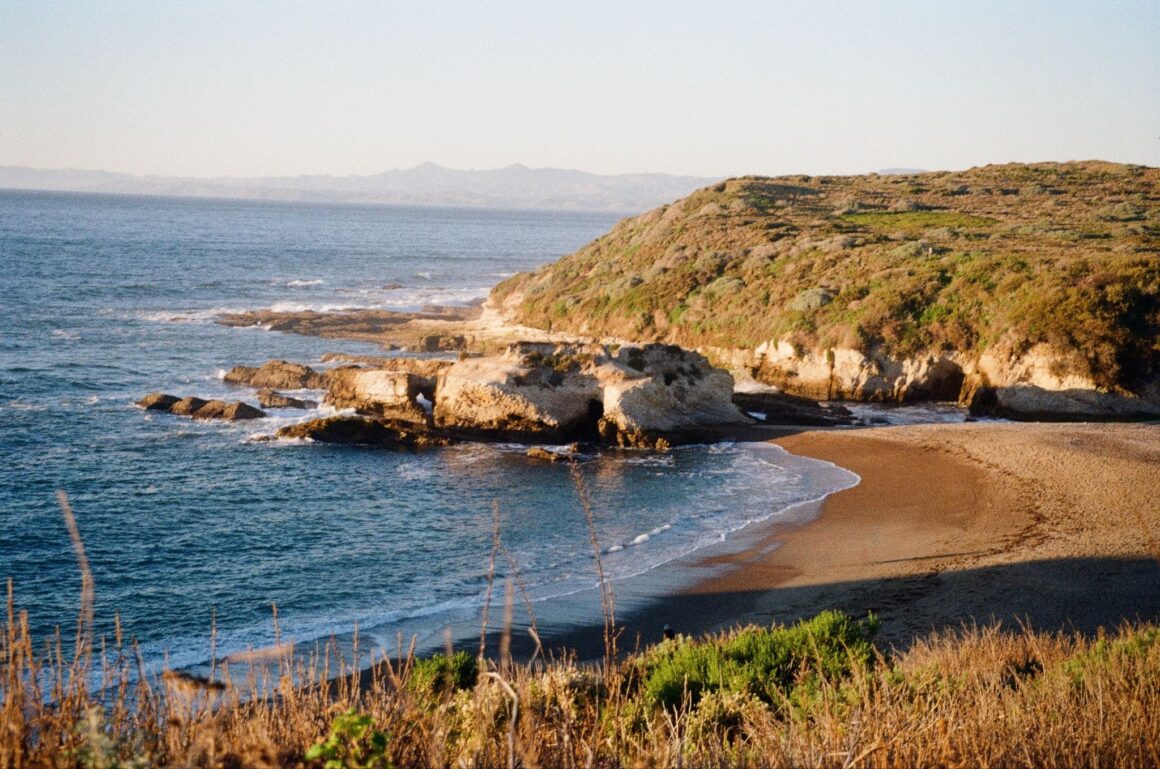
Photo by Ella Giuliani (A 35mm film photo of Montaña de Oro State Park)
Art projects
Nature has inspired some of the world’s greatest works of art. Impressionist painter Claude Monet based many of his most notable pieces on experiences in natural environments, including his beloved water lily series.
Art can be an effective medium for translating the curiosity and wonder felt in nature into a tactile form of creative expression. An art project can range from a simple journal page doodle to a full-wall mural.
Ideas:
- Bring a watercolor set and paint what you observe.
- Create a cyanotype with collected leaves or with the shadows of trees.
- Take an art project outside with you.
- Sketch a favorite botanical detail or scenic view.
- Map your nature walk from the trailhead to your favorite spot.
Guided Walks
The Central Coast State Parks Association (CCSPA) supports guided walks in State Parks along the Central Coast, where participants can learn about the land from State Park Interpreters and volunteers while connecting with other nature enthusiasts in the community. This is a valuable resource for fulfilling daily time in nature, while learning about what makes local ecosystems unique.
To view upcoming offerings, visit /calendar/.
Time spent in nature has the power to restore, inspire and reconnect us to local land while supporting overall health. CCSPA is dedicated to helping people throughout the Central Coast experience these meaningful moments and build lasting relationships with State Park land.
